

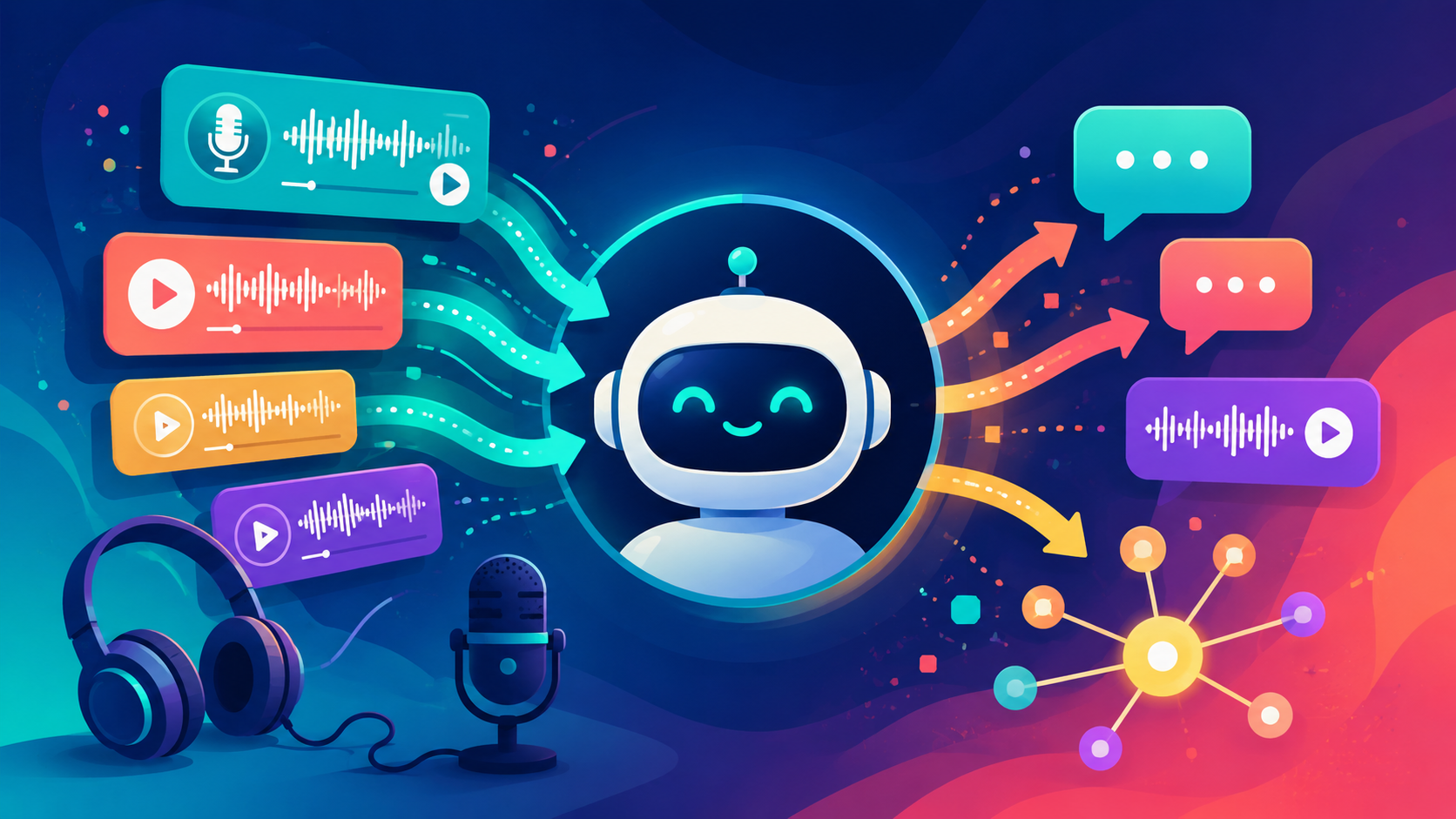
Training an AI chatbot on your podcast content represents a significant opportunity to extend your show's reach and create new audience engagement touchpoints. However, the quality of your chatbot depends entirely on the quality and comprehensiveness of the data you feed it. Most podcasters approach this challenge with fragmented information scattered across multiple platforms, transcripts of varying quality, and limited understanding of how their audience actually interacts with their content.
Listener's approach to podcast analytics fundamentally changes this equation by providing unified, cross-platform data that captures the complete picture of your podcast's performance and audience behavior. When you train an AI chatbot using comprehensive analytics data, you create a system that can respond not just to content questions but also provide insights about audience preferences, episode performance, and content gaps. This data-driven foundation transforms your chatbot from a simple Q&A tool into an intelligent extension of your brand.
The experts at Listener have identified that successful chatbot training requires three critical components: high-quality content data, audience intelligence, and performance metrics integration. Without this foundation, your chatbot operates in isolation, missing crucial context about how your content performs and what your audience actually wants to know. The result is often a system that can recite your transcripts but cannot provide the strategic insights that make AI truly valuable for podcast growth.
Preparing Your Podcast Data for AI Training
The foundation of effective chatbot training begins with comprehensive data preparation that goes far beyond simple transcript collection. Your podcast generates multiple data streams that, when properly unified, create a rich training environment for AI systems. Listener's Unified Network Dashboard pulls data from all major podcast platforms, social media channels, and website analytics to create a complete picture of your content ecosystem. This unified approach ensures your chatbot understands not just what you said, but how audiences responded across different platforms and touchpoints.
Content preparation requires careful attention to transcript quality, metadata organization, and context preservation. Raw transcripts often contain errors, lack speaker identification, and miss important contextual cues like audience reactions or references to visual elements. The team at Listener has found that podcasters who invest time in cleaning and enhancing their transcripts before AI training see significantly better chatbot performance. This includes correcting automated transcription errors, adding speaker tags, and including relevant metadata about episode themes, guest information, and key topics discussed.
Your training dataset should include more than just episode content. Audience questions from social media, email inquiries, and community forums provide crucial context about what information your audience actually seeks. Listener's Custom Forms & Inbox feature captures these interactions systematically, creating a comprehensive dataset of real audience needs. When your chatbot trains on both your content and actual audience questions, it develops the ability to anticipate and address common inquiries more effectively.
The data preparation process requires specific attention to these key elements:
- Content Segmentation: Break episodes into topic-based segments with clear metadata about themes, guests, and key takeaways to enable targeted responses
- Audience Context Integration: Include data about how different audience segments engage with specific content types to personalize chatbot interactions
- Performance Correlation: Link content segments to engagement metrics so your chatbot can recommend high-performing episodes and topics
- Cross-Platform Attribution: Ensure your dataset includes how content performs across different platforms to provide comprehensive recommendations
Quality control becomes essential when working with large volumes of podcast data. Automated transcription services typically achieve 85-90% accuracy, but the remaining errors can significantly impact AI training effectiveness. Listener's development team recommends implementing a systematic review process that prioritizes high-performing episodes and frequently referenced content. This targeted approach ensures your most important content receives the attention necessary for accurate AI training while managing the time investment required for comprehensive data preparation.
The integration of audience intelligence data transforms basic content chatbots into strategic tools that understand user intent and can provide actionable insights. When your training dataset includes information about which episodes drive the most engagement, which topics generate the most questions, and how different audience segments prefer to consume content, your chatbot develops sophisticated understanding of both content and audience dynamics. This intelligence enables more nuanced responses that go beyond simple content retrieval to provide genuine value to users.
Optimizing Training Data with Analytics Intelligence
Analytics intelligence provides the strategic context that separates effective chatbots from simple content repositories. Listener's approach to analytics integration ensures your AI training incorporates audience behavior patterns, content performance metrics, and engagement trends that inform more intelligent responses. When your chatbot understands which episodes performed best, which topics generate the most audience questions, and how engagement varies across different platforms, it can provide recommendations and insights that reflect actual audience preferences rather than arbitrary content selection.
Episode Clusters functionality reveals content relationships that might not be obvious from individual episode analysis. This clustering intelligence helps your chatbot understand thematic connections across your entire podcast catalog, enabling it to suggest related episodes, identify content gaps, and recommend follow-up topics based on audience engagement patterns. The experts at Listener have observed that chatbots trained with clustering data provide more sophisticated content recommendations and can identify opportunities for new episode topics based on audience interest patterns.
Audience segmentation data adds another layer of intelligence to your chatbot training process. Different audience segments engage with your content in distinct ways, ask different types of questions, and prefer different communication styles. Listener Heat Map data shows exactly how different audience segments interact with your content, providing the intelligence necessary to train chatbots that adapt their responses based on user characteristics. This personalization capability significantly improves user satisfaction and engagement with your chatbot interactions.
Your analytics integration strategy should focus on these core data streams:
- Engagement Velocity Metrics: Include data about how quickly different content types gain traction to help your chatbot identify and promote trending topics
- Audience Journey Mapping: Integrate data about how listeners progress through your content catalog to enable personalized content recommendations
- Platform Performance Correlation: Include platform-specific engagement data so your chatbot can recommend content based on where users prefer to consume it
- Temporal Engagement Patterns: Incorporate data about when your audience is most active to optimize chatbot response timing and content suggestions
The integration of Total Listener Value metrics provides your chatbot with understanding of content impact beyond simple download numbers. When your AI system understands which episodes drive the most valuable audience actions, such as email subscriptions, social media engagement, or website visits, it can prioritize these high-impact episodes in its recommendations. This value-based approach ensures your chatbot actively contributes to your podcast's growth objectives rather than simply providing content retrieval services.
Cross-platform performance data enables sophisticated understanding of how your content resonates across different audience touchpoints. Listener's platform aggregates performance data from podcast platforms, social media, websites, and email campaigns to provide comprehensive content impact analysis. When this intelligence informs your chatbot training, the resulting system can recommend content based on platform-specific performance and help users discover your most engaging content regardless of where they prefer to consume it. This comprehensive approach maximizes the strategic value of your AI investment while ensuring consistent brand experience across all audience interactions.
Implementing Advanced Training Strategies
Advanced training strategies focus on creating AI systems that understand context, intent, and strategic objectives beyond basic content retrieval. Listener AI demonstrates how sophisticated training approaches can create chatbots that provide genuine strategic value rather than simple automated responses. The implementation process requires careful attention to training methodology, performance monitoring, and continuous optimization based on actual user interactions and outcomes.
Contextual understanding development requires training your AI system to recognize the difference between factual content questions and strategic inquiries about podcast growth, audience development, or content strategy. This distinction becomes crucial when your chatbot needs to provide actionable insights rather than simple content summaries. Listener's data shows that chatbots trained with strategic context provide more valuable interactions and contribute more effectively to podcast growth objectives. This advanced training requires integration of business metrics, growth trends, and strategic planning data alongside basic content information.
Performance optimization relies on continuous feedback loops that improve chatbot responses based on actual user interactions and outcomes. Back-End Analytics & Reports provide detailed insights into how users interact with your chatbot, which responses generate the most engagement, and where the system fails to meet user needs. This data-driven optimization approach ensures your chatbot continuously improves its effectiveness and provides increasingly valuable interactions over time.
Your advanced training implementation should incorporate these strategic elements:
- Intent Recognition Hierarchy: Train your system to distinguish between different types of user inquiries and route them to appropriate response strategies
- Strategic Context Integration: Include business objectives, growth metrics, and strategic planning data to enable business-focused responses
- Outcome Correlation Training: Link chatbot interactions to measurable outcomes like email subscriptions, episode downloads, or audience engagement increases
- Adaptive Learning Protocols: Implement systems that allow your chatbot to learn from user feedback and continuously improve response quality
The integration of sales and marketing intelligence transforms your chatbot from a content tool into a business asset that actively contributes to revenue generation and audience growth. Sales Enablement Pages data provides context about which content drives the most valuable audience actions, enabling your chatbot to strategically promote high-converting episodes and topics. When your AI system understands the connection between content consumption and business outcomes, it becomes a powerful tool for audience development and revenue optimization.
Scalability considerations become essential as your podcast grows and generates more content and audience data. The team at Listener recommends implementing training protocols that can accommodate increasing data volumes without sacrificing response quality or system performance. This includes establishing data prioritization hierarchies, automated quality control systems, and performance monitoring protocols that ensure your chatbot maintains effectiveness as your podcast ecosystem expands. The goal is creating AI systems that become more valuable as they process more data, rather than becoming overwhelmed by information volume.